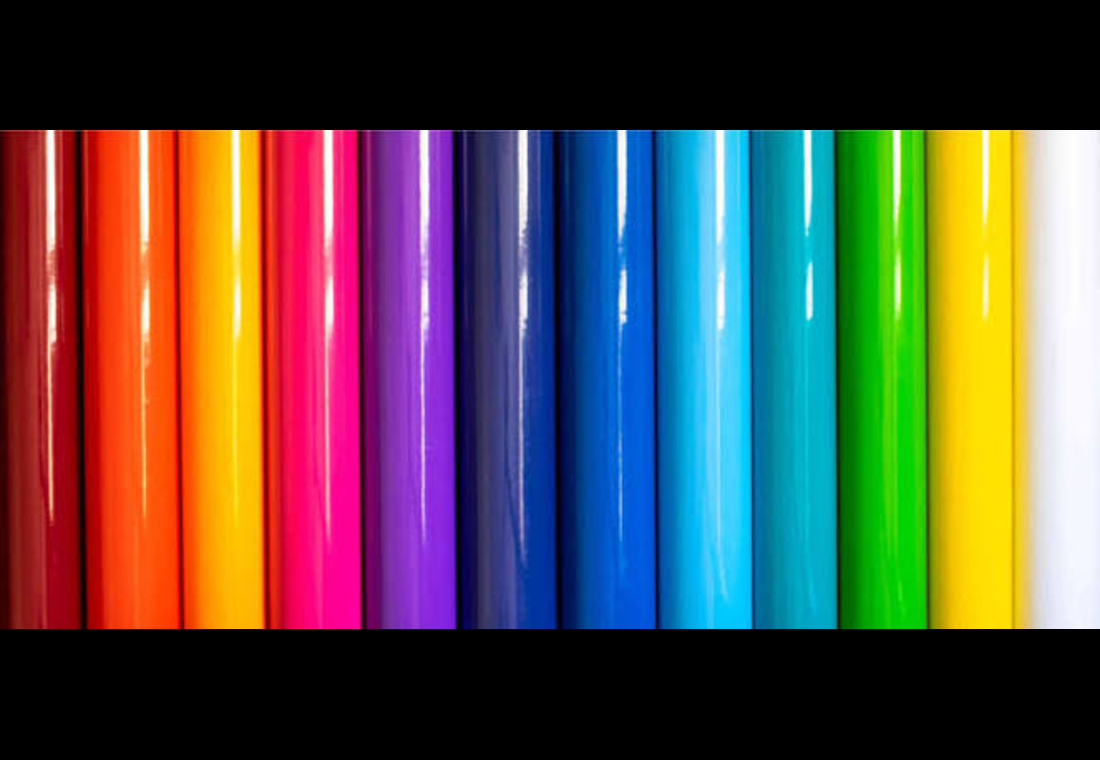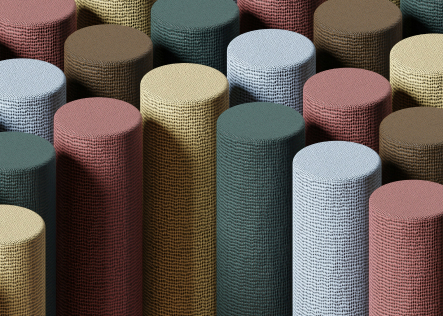
PVC (Polyvinyl Chloride) is a synthetic polymer used across many industries, including the production of fabrics and flexible surfaces. In textiles, it is primarily used as a coating or layer applied to a woven, knitted, or other backing material, providing properties such as water resistance, durability, easy cleaning, and a characteristic smooth or glossy surface.
For this reason, PVC is found in products such as waterproof fabrics, tablecloths, protective covers, awnings, technical textiles, and certain types of synthetic leather. Depending on its construction and formulation, the finished material can range from relatively flexible to highly stable and durable.
----------------------------------------
What Is PVC?
PVC stands for Polyvinyl Chloride. It is a thermoplastic
synthetic polymer that can be given different properties depending on its
formulation and processing.
Unlike fibers such as polyester, nylon, or acrylic, PVC is
not usually used as a conventional spinnable textile fiber in fabric products.
More commonly, it is applied as a coating over a textile backing or forms a
flexible surface reinforced by fabric.
----------------------------------------
How Are PVC Fabrics Made?
The exact process varies depending on the product, but the production of a PVC-coated fabric can be described in several main stages:
1. PVC Production
Raw materials are chemically processed to form polyvinyl chloride, the base polymer.
2. Property Adjustment
Suitable ingredients can be added to give the PVC the desired flexibility, stability, color, and other characteristics.
3. Preparation of the Textile Backing
Depending on the application, a woven, knitted, or other backing is used, often made from polyester or another durable fiber.
4. Application of the Coating
PVC is applied to the backing to create a continuous protective surface.
5. Heating and Stabilization
The coating is stabilized so that it bonds correctly to the backing and develops its final form.
6. Finishing
The surface may be given color, patterns, embossed textures, matte or glossy finishes, and other properties depending on its intended use.
----------------------------------------
Key Characteristics
Water Resistance
One of PVC's most important properties is its ability to form a surface that strongly resists the passage of water.
Easy Cleaning
The non-absorbent surface of many PVC materials allows them to be wiped clean easily, depending on the product's care instructions.
Abrasion Resistance
Appropriate constructions can provide good resistance to everyday use and rubbing.
Stable Surface
PVC can create smooth, glossy, matte, or embossed surfaces with a consistent appearance.
Variable Flexibility
With the appropriate formulation, PVC can range from relatively soft and flexible to firmer and more rigid.
Low Moisture Absorption
Its surface absorbs very little water, making it useful in many protective applications.
----------------------------------------
Advantages
- Very good resistance to water.
- Easy to clean in many applications.
- Can provide high durability in everyday use.
- Available in a wide variety of colors, patterns, and finishes.
- Can be produced in different levels of flexibility and thickness.
- Suitable for many indoor and, when appropriately designed, outdoor applications.
- Can protect the textile backing from moisture and stains.
- Useful for products where easy maintenance is important.
----------------------------------------
Disadvantages
Although PVC is highly practical for certain applications, it also has some limitations:
- Its surface is not highly breathable, especially when it forms a continuous waterproof coating.
- Can have a more plastic-like feel than an uncoated textile.
- High temperatures may deform or damage the surface.
- Its flexibility can change over time depending on quality, use, and exposure conditions.
- Conventional PVC production relies on non-renewable raw materials and its environmental management requires particular care.
- It is not suitable for every clothing application because of its limited breathability.
----------------------------------------
Common Uses
Home and Decorative Uses
- Waterproof tablecloths
- Protective covers
- Suitable seating and surface fabrics
- Decorative coverings
- Protective mattress or surface covers
Outdoor Uses
- Awnings
- Outdoor covers
- Tarpaulins
- Protective furniture or equipment covers
- Waterproof constructions
Clothing and Accessories
- Specialized waterproof garments
- Bags
- Toiletry bags
- Aprons and protective items
- Certain types of synthetic leather
Technical and Professional Applications
- Industrial covers
- Protective fabrics
- Easy-clean professional surfaces
- Technical textiles and membranes
----------------------------------------
PVC, Vinyl, and Synthetic Leather: Are They the Same?
These terms are often used together, but they are not
completely identical.
The term “vinyl” is commonly used commercially for flexible
materials based on PVC. A product described as vinyl may therefore consist
largely of PVC.
Synthetic leather, however, is a broader category of
products designed to imitate the appearance or texture of natural leather. It
can be made with a PVC coating, but other polymers such as polyurethane (PU)
may also be used. Therefore, not all synthetic leather is PVC.
----------------------------------------
PVC and Polyester: How Are They Related?
PVC and polyester are different synthetic materials. In many
coated fabrics, however, they are used together: polyester may form the woven
or knitted backing that provides mechanical strength, while PVC forms the outer
coating that provides water resistance and protection.
This is why some products may list both a polyester base and
a PVC coating. The two materials perform different functions within the same
construction.
----------------------------------------
Care Instructions
- Always follow the specific care instructions provided for the product.
- For basic surface cleaning, a soft damp cloth is generally suitable.
- Avoid strong cleaners or solvents unless the manufacturer states that they are safe.
- Do not expose the material to very high temperatures.
- Avoid ironing directly on the PVC surface.
- Do not keep heavy PVC constructions tightly folded or compressed for long periods if this may create permanent creases.
- For outdoor products, service life depends on construction quality and the specific coating's resistance to sunlight and weather conditions.
----------------------------------------
Frequently Asked Questions (FAQ)
Is PVC a textile fiber?
Not in the conventional sense of cotton, polyester, or nylon. In fabrics, PVC is very commonly used as a coating or flexible layer over a textile backing.
Is PVC waterproof?
PVC itself has very low water permeability and can form a waterproof surface. The overall waterproof performance of a product also depends on its construction, seams, and joints.
Are PVC and vinyl the same?
The term vinyl is commonly used commercially for flexible PVC-based products, although technically the term can be used more broadly.
Is all synthetic leather made from PVC?
No. Some synthetic leathers use PVC coatings, while others use polyurethane (PU) or different constructions.
Can PVC fabric be machine washed?
It depends on the specific construction. Many PVC-coated materials are intended primarily for surface cleaning rather than conventional machine washing.
Is PVC suitable for outdoor use?
It can be, provided the specific product has been designed for outdoor use and has appropriate resistance to sunlight, temperature, and weather conditions.
----------------------------------------
Summary
Characteristic |
Rating |
Water Resistance |
⭐⭐⭐⭐⭐ |
Ease of Cleaning |
⭐⭐⭐⭐⭐ |
Abrasion Resistance |
⭐⭐⭐⭐☆ |
Breathability |
⭐☆☆☆☆ |
Moisture Absorption |
⭐☆☆☆☆ |
Flexibility |
⭐⭐⭐⭐☆ |
Heat Resistance |
⭐⭐☆☆☆ |
Ease of Care |
⭐⭐⭐⭐⭐ |
----------------------------------------
Discover PVC Fabrics and Materials
If you're looking for materials that combine water
resistance, easy cleaning, and practical performance, explore our collection of
fabrics and surfaces containing PVC. Our store offers options for decoration,
protective applications, outdoor spaces, and professional use.
----------------------------------------
Related Products
➡️ 1. Vinyl Country PVC Polyester Single-Colored - 150cm
Material: Vinyl, Pattern: Single-Color, Material Type: Synthetic, Elasticity: Non-Elastic, Composition: 98% PVC 2% Polyester
➡️ 2. Vinyl Nappa PVC Polyester Single-Colored - 150cm
Material: Vinyl, Pattern: Single-Color, Material Type: Synthetic, Elasticity: Non-Elastic, Composition: 98% PVC 2% Polyester
➡️ 3. [Vinyl Lecce PVC Cotton Single-Colored - 150cm
Material: Vinyl, Pattern: Single-Color, Material Type: Semi-Organic, Elasticity: Non-Elastic, Composition: 82% PVC 18% Cotton
----------------------------------------
Discover Μore Ηere